Advanced Guide to Masonry
Masonry is a falling blocks game for people who like to build. Stones fall one at a time into a well that is ten columns wide and twenty rows tall, with two more hidden rows above it where each new stone appears. You slide a stone sideways, turn it in quarter turns and drop it, and every time a row is filled from wall to wall it is cleared and everything above it settles down. Each cleared row counts as one course laid on a building, which is why the game keeps a running tally of courses next to your score.
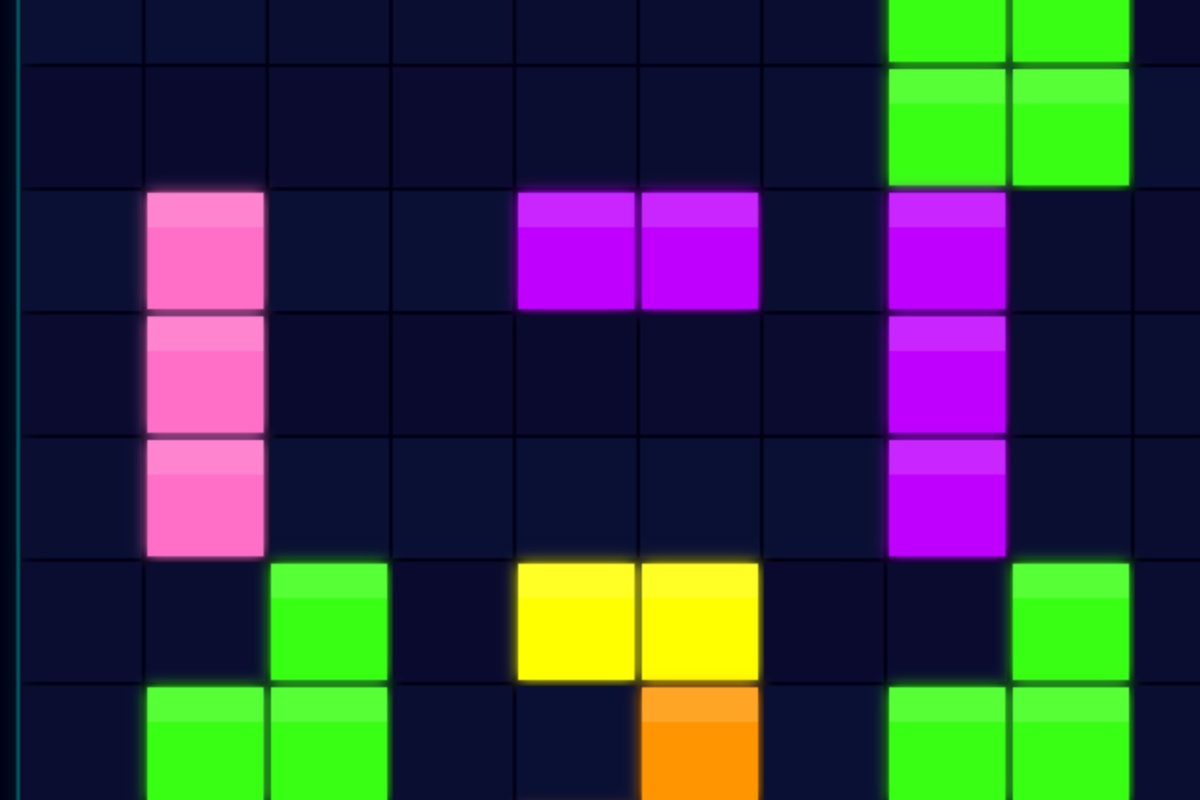
There are seven stones, all made of four squares, and each has its own name, colour and chisel pattern so you never have to rely on colour alone. The Bar is four in a line, the Block is a square, the Tee has three across with one on top, Hook-L and Hook-J are mirror-image corners, and Step-S and Step-Z are the two zig-zags. Stones arrive from a bag that holds all seven once, shuffled; when the bag is empty a new shuffled bag begins. That keeps long droughts impossible: at most twelve stones ever fall between one Bar and the next. The queue beside the well always shows the next three stones, so you can plan a move ahead.
Controls
On a keyboard, the left and right arrows slide the stone and hold down to keep sliding after a short delay, the down arrow drops it twenty times faster, and Space drops it all the way and locks it. The up arrow or X turns the stone clockwise, Z turns it back, C or Shift swaps it with the held stone, G shows or hides the ghost outline, P or Escape pauses and M mutes; switching to another tab pauses and saves too. On a phone or tablet, swipe across the well and the stone moves one column for every 28 pixels your finger travels, a tap turns it clockwise, a two-finger tap turns it back, holding a swipe downward drops it faster, and a quick flick down drops it all the way. The Controls button under the well switches to an on-screen button layout with every button at least 48 pixels square; Hold lives on that button row, since the swipe layout has no Hold gesture.
Hold, the Ghost and the Lock Delay
You can set one stone aside with Hold and bring it back later, but only once per stone: after a swap the hold slot greys out until the stone you are playing has locked. The ghost is a thin outline in the well that shows where the current stone will land, which makes long drops safe. When a stone comes to rest it does not lock at once; it has half a second to be nudged or turned. Each slide or turn while it rests restarts that half second, but only fifteen times per stone. The sixteenth slide or turn still happens and then locks the stone at once, so you cannot stall forever, and each time the stone reaches a lower row the count of resets starts again.
Scoring
Clears score by the number of rows at once, multiplied by your level: one row is 100, two rows are 300, three rows are 500 and four rows, which the game calls a keystone, are 800. A keystone that follows your previous keystone, with no smaller clear in between, earns half as much again. Clearing on consecutive stones builds a combo: from the second clear in a row, each clear adds 50 points times the number of clears before it in the chain times your level. Soft drops pay one point per row fallen and hard drops pay two, and emptying the whole well after a clear is a perfect clear worth 1,200 times your level. In the campaign and Marathon every ten courses raises the level by one, which makes stones fall faster, to a top speed of twelve rows per second at level 20. Sprint and the Daily Seed hold one fixed level for the whole run.
Tips and Strategy
- Keep one column open for the Bar. Stack evenly on nine columns and leave the tenth empty, then drop a Bar into it for a four-row keystone. Because the bag deals every stone once per seven, a Bar is never far away.
- Use Hold to save the Bar. If a Bar arrives before the well is ready, hold it and play something else. Remember you can swap only once per stone.
- Read the queue, not just the stone. The three upcoming stones tell you whether to leave a one-wide gap or fill it now.
- Lean on the ghost. Before you hard drop, check the outline for holes the stone would leave under it.
- Use the lock delay. A stone that has landed can still be slid into a gap beside it, as long as you act within the half second.
- Watch the top four rows. They tint red when the stack nears the top. A stone that cannot appear ends the run.
The Guild Campaign
The campaign is a guild of masons raising a town, one building at a time, and each building is five stages. Every stage asks you to lay a set number of courses before the stack reaches the top: the Well House asks for 10, 12, 14, 16 and 18, the Granary for 16, 18, 22, 26 and 30, and the Chapel for 20, 24, 28, 34 and 46. Each building starts at a higher level than the last (the Well House at level 1, the Granary at 2, the Chapel at 3) and the level climbs by one for every ten courses laid inside a stage. A stage uses the same stones in the same order every attempt, so a retry is practice for a known pile. Winning a stage opens the next one on the Guild map and earns up to three stars: one for winning, one for keeping the stack at fourteen rows or lower, and one for setting a keystone or beating the par time shown on the stage card. Each win also pays coins, twenty plus ten per star and ten per keystone. The Bell Tower, the Cloister, the Nave, the Spire and the Cathedral are shown on the map as coming soon.
The Granary adds rubble: two, then three, then four rows already stand at the foot of the well, each with a single gap, and clearing them counts as courses too. The Chapel adds wet mortar: a stone that has come to rest slides one cell sideways after about a third of a second, and a note at the top of the well says whether it drifts left or right; the direction flips from one stage to the next, so you leave room on the downwind side. A wall or the stack stops the slide.
Sprint, Marathon and the Daily Seed
Sprint asks for 40 courses at a fixed level 5 on a fresh random seed as fast as you can, and your time goes on the Sprint leaderboard, where a lower time is better. Marathon is endless play from level 1 on a fresh random seed, with the level rising every ten courses up to twenty, and your score goes on the Marathon board. The Daily Seed gives every player the same stones for the UTC day at a fixed level 4, with a two-minute clock; when time runs out the stone in motion still locks and counts. Only your first Daily of the day is scored and filed on that day's board and in your streak; later attempts are practice, with no board entry, no streak and no coins.
How a Run Ends
A run ends when a new stone has no room to appear at the top of the well, or when a stone locks entirely inside the two hidden rows. A campaign stage then offers Retry or the Guild map; Sprint, Marathon and the Daily show a result card, and pressing Continue on the result card offers your score to the matching leaderboard. The game saves when you pause, switch tabs or leave, and after every stage, so Continue on the title card picks up the stage or run you left.
Frequently Asked Questions
How does the seven-stone bag work in Masonry?
Masonry deals stones from a shuffled bag that holds each of the seven stones exactly once. When the bag empties, a fresh shuffled bag starts. Because every bag contains a Bar, at most twelve stones ever fall between two Bars, and the queue beside the well always shows the next three stones.
What does Hold do, and why can I only use it once?
Hold swaps the falling stone with the one you have set aside; the first time, it simply stores the stone and brings in the next one from the queue. You can swap only once per stone: the hold slot greys out until the stone in play has locked, so you cannot cycle through stones forever.
How does the lock delay work?
A stone resting on something locks after half a second. Sliding or turning it restarts that timer, but only fifteen times per stone; the next slide or turn after that locks it at once. Reaching a lower row gives the stone a fresh set of fifteen resets. A hard drop skips the delay entirely.
What is a keystone, and why does clearing four rows matter?
A keystone is a four-row clear, made by dropping a Bar into a one-wide gap. It scores 800 times your level, and a keystone that follows your previous keystone, with no smaller clear in between, earns half as much again. It also pays ten coins in the campaign. Each cleared row also counts as one course, so a keystone lays four courses at once.
How do I play Masonry on a phone?
Swipe across the well to slide the stone, one column for every 28 pixels of travel. Tap to turn it clockwise, tap with two fingers to turn it back, hold a downward swipe to drop faster and flick down to drop all the way. Hold is on the button row: the Controls button switches to on-screen buttons that are at least 48 pixels square.
What are rubble and wet mortar?
Rubble appears in the Granary: two, three or four rows already stand at the foot of the well at the start of a stage, each with one gap, and clearing them counts as courses. Wet mortar appears in the Chapel: a stone that has come to rest slides one cell sideways after about a third of a second, a note at the top of the well says left or right, and the direction flips every stage. A wall or the stack stops the slide.
How does the daily seed work, and why is only one attempt scored?
Every player gets the same stones for the UTC day and a two-minute clock; a stone still falling when time runs out locks and counts. Your first Daily of the day is scored, filed on that day's leaderboard and added to your streak. Later attempts the same day are practice, with no board entry, so the day's board stays a fair contest on identical stones.
How do the campaign saves and Continue work, and why do some buildings say coming soon?
Masonry saves in your browser after every stage and when you pause, switch tabs or close the page, so Continue on the title card resumes the stage or run you left, with the stones in the same order. The first release has fifteen stages in three buildings, the Well House, the Granary and the Chapel; the Bell Tower, the Cloister, the Nave, the Spire and the Cathedral appear on the Guild map as coming soon.
How do stars and coins work in the campaign?
Every stage can earn three stars: one for laying all its courses, one for never letting the stack rise above fourteen rows, and one for setting at least one keystone or finishing within the par time on the stage card, which is six seconds per course. A win pays twenty coins, ten more for each star and ten for each keystone. The best result for each stage is kept, so replaying can only add stars.
How fast do the stones fall, and does the speed change?
Speed follows your level. In the campaign and Marathon the level rises by one for every ten courses laid. Stages start at level 1 in the Well House, 2 in the Granary and 3 in the Chapel, and Marathon starts at 1. At level 20 stones fall twelve rows a second. Sprint is fixed at level 5 and the Daily Seed at level 4, so those speeds never change during the run.
How is the Sprint timed, and what happens if the stack tops out?
The Sprint clock starts when the run begins and stops when the fortieth course is laid, on a fresh random stone order. A faster time replaces a slower one on the Sprint board. If the stack reaches the lintel first, the run ends with no time filed and you can start another Sprint at once.